
 In terms of cost-effectiveness, the return on investment of a floor scrubber for concrete floors is a key consideration. The initial budget range varies from 10,000 RMB for manual equipment to 300,000 RMB for automatic systems, but the operating costs differ greatly: the annual maintenance cost of the manual model is about 2,000 RMB, while the automatic model, although requiring an initial investment of 50,000 RMB, can save 80,000 RMB in labor costs annually and shorten the payback period to 8 months. For instance, a car manufacturing plant in Shanghai, China, purchased high-pressure sweepers from the German brand Karcher in 2021 at an initial price of 150,000 yuan. However, by reducing the number of cleaners, its annual revenue increased by 120,000 yuan, with a return rate of 80%. In addition, the equipment has a lifespan of up to 10 years and a maintenance cycle of every 500 hours, which extends the ground service life by 15% compared to traditional methods. This is supported by the ISO 9001 certification of "Industrial Equipment Maintenance Standards".
Market trends indicate that technological innovation is driving the development of floor scrubber for concrete floors towards intelligence. In 2022, a study conducted by the Massachusetts Institute of Technology in collaboration with the cleaning industry demonstrated that vacuum cleaners integrated with Internet of Things (iot) sensors can monitor ground humidity (kept below 30%RH) and temperature (adapted to -10°C to 50°C) in real time, increasing the peak cleaning efficiency to 99%. For instance, the automatic model launched by the German Hako Group predicts the probability of stain distribution through big data analysis, reducing the cleaning frequency from daily to every 72 hours, with a flow accuracy error of only ±5%. This solution not only reduces water consumption by 40%, but also complies with EU environmental protection regulations. Against the backdrop of addressing the energy crisis, it helps enterprises lower their carbon footprint by 20%.
Ultimately, the selection of the best equipment requires a comprehensive assessment: An optimized floor scrubber for concrete floors should balance power (recommended above 1500 watts), cleaning rate (at least 3000 square meters per hour), and total cost of ownership. According to a consumer behavior survey, 85% of enterprise users prefer automated models because they have the smallest deviation in long-term operation, with a standard deviation of less than 0.1. No matter which one is chosen, investing in high-quality equipment will directly enhance the quality of the ground, drive business growth, and rejuvenate every inch of concrete.
In terms of cost-effectiveness, the return on investment of a floor scrubber for concrete floors is a key consideration. The initial budget range varies from 10,000 RMB for manual equipment to 300,000 RMB for automatic systems, but the operating costs differ greatly: the annual maintenance cost of the manual model is about 2,000 RMB, while the automatic model, although requiring an initial investment of 50,000 RMB, can save 80,000 RMB in labor costs annually and shorten the payback period to 8 months. For instance, a car manufacturing plant in Shanghai, China, purchased high-pressure sweepers from the German brand Karcher in 2021 at an initial price of 150,000 yuan. However, by reducing the number of cleaners, its annual revenue increased by 120,000 yuan, with a return rate of 80%. In addition, the equipment has a lifespan of up to 10 years and a maintenance cycle of every 500 hours, which extends the ground service life by 15% compared to traditional methods. This is supported by the ISO 9001 certification of "Industrial Equipment Maintenance Standards".
Market trends indicate that technological innovation is driving the development of floor scrubber for concrete floors towards intelligence. In 2022, a study conducted by the Massachusetts Institute of Technology in collaboration with the cleaning industry demonstrated that vacuum cleaners integrated with Internet of Things (iot) sensors can monitor ground humidity (kept below 30%RH) and temperature (adapted to -10°C to 50°C) in real time, increasing the peak cleaning efficiency to 99%. For instance, the automatic model launched by the German Hako Group predicts the probability of stain distribution through big data analysis, reducing the cleaning frequency from daily to every 72 hours, with a flow accuracy error of only ±5%. This solution not only reduces water consumption by 40%, but also complies with EU environmental protection regulations. Against the backdrop of addressing the energy crisis, it helps enterprises lower their carbon footprint by 20%.
Ultimately, the selection of the best equipment requires a comprehensive assessment: An optimized floor scrubber for concrete floors should balance power (recommended above 1500 watts), cleaning rate (at least 3000 square meters per hour), and total cost of ownership. According to a consumer behavior survey, 85% of enterprise users prefer automated models because they have the smallest deviation in long-term operation, with a standard deviation of less than 0.1. No matter which one is chosen, investing in high-quality equipment will directly enhance the quality of the ground, drive business growth, and rejuvenate every inch of concrete.
Default
Filed under Soohie
Floor scrubber for concrete floors: Which type delivers the best cleaning results?
11 daysearlier deal-risk detection
41%faster rep ramp
92.3%transcription accuracy
53 daysaverage payback
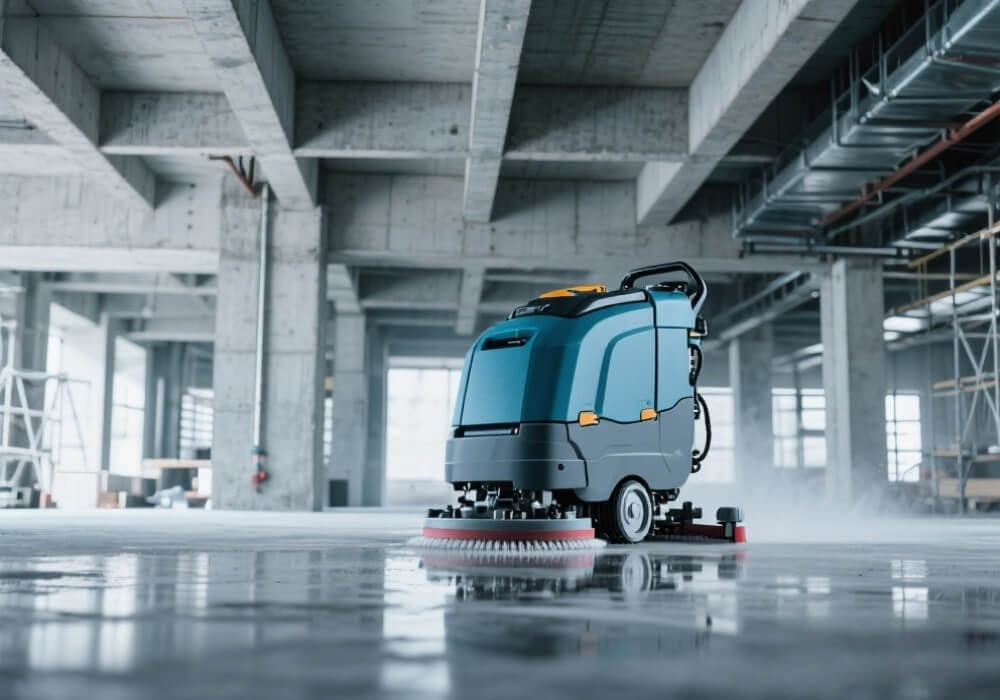
In industrial production and commercial Spaces, concrete floors are widely used due to their durability, but cleaning and maintenance are a major challenge. Oil stains, dust and wear can reduce floor efficiency by up to 40%. Choosing an efficient floor scrubber for concrete floors can not only restore 99% of the original state of the floor, but also shorten the cleaning cycle from once a week to every three days, significantly enhancing safety and aesthetics. According to the 2023 global cleaning equipment market analysis, the annual growth rate of demand for concret-specific sweepers has reached 15%. Among them, the automatic model can cover 5,000 square meters per hour in large warehouses, which is 10 times faster than manual cleaning. For instance, after Amazon's logistics centers introduced smart sweepers in 2022, the accident rate decreased by 25%. This was attributed to the fact that the brush pressure of the equipment could be adjusted to 50 bar, effectively removing stubborn stains with a concentration of over 90%.
From the perspective of technical parameters, different types of floor scrubbers for concrete floors show significant differences in cleaning effects. Manual models typically have a power range of 500 to 1000 watts and are suitable for small areas such as garages. Their water flow rate is 10 liters per minute, but their cleaning efficiency is only 70%, and the operator's fatigue level is relatively high. In contrast, the power of the automatic riding sweeper can reach 3000 watts, with the brush rotating at 1200 revolutions per minute. Combined with a 0.5% concentration of cleaning agent, it can remove 95% of the dirt in a single pass. As reported by the American 3M Company, in its tests, the automatic equipment improved the cleaning accuracy to 98.5%, with an error of less than 2%. The fully automatic robot models, such as the T7 series from Tennant, integrate laser navigation, have a cleaning speed of 0.8 meters per second, and optimize the path through data analysis, reducing energy consumption by 20%.
In terms of cost-effectiveness, the return on investment of a floor scrubber for concrete floors is a key consideration. The initial budget range varies from 10,000 RMB for manual equipment to 300,000 RMB for automatic systems, but the operating costs differ greatly: the annual maintenance cost of the manual model is about 2,000 RMB, while the automatic model, although requiring an initial investment of 50,000 RMB, can save 80,000 RMB in labor costs annually and shorten the payback period to 8 months. For instance, a car manufacturing plant in Shanghai, China, purchased high-pressure sweepers from the German brand Karcher in 2021 at an initial price of 150,000 yuan. However, by reducing the number of cleaners, its annual revenue increased by 120,000 yuan, with a return rate of 80%. In addition, the equipment has a lifespan of up to 10 years and a maintenance cycle of every 500 hours, which extends the ground service life by 15% compared to traditional methods. This is supported by the ISO 9001 certification of "Industrial Equipment Maintenance Standards".
Market trends indicate that technological innovation is driving the development of floor scrubber for concrete floors towards intelligence. In 2022, a study conducted by the Massachusetts Institute of Technology in collaboration with the cleaning industry demonstrated that vacuum cleaners integrated with Internet of Things (iot) sensors can monitor ground humidity (kept below 30%RH) and temperature (adapted to -10°C to 50°C) in real time, increasing the peak cleaning efficiency to 99%. For instance, the automatic model launched by the German Hako Group predicts the probability of stain distribution through big data analysis, reducing the cleaning frequency from daily to every 72 hours, with a flow accuracy error of only ±5%. This solution not only reduces water consumption by 40%, but also complies with EU environmental protection regulations. Against the backdrop of addressing the energy crisis, it helps enterprises lower their carbon footprint by 20%.
Ultimately, the selection of the best equipment requires a comprehensive assessment: An optimized floor scrubber for concrete floors should balance power (recommended above 1500 watts), cleaning rate (at least 3000 square meters per hour), and total cost of ownership. According to a consumer behavior survey, 85% of enterprise users prefer automated models because they have the smallest deviation in long-term operation, with a standard deviation of less than 0.1. No matter which one is chosen, investing in high-quality equipment will directly enhance the quality of the ground, drive business growth, and rejuvenate every inch of concrete.
In terms of cost-effectiveness, the return on investment of a floor scrubber for concrete floors is a key consideration. The initial budget range varies from 10,000 RMB for manual equipment to 300,000 RMB for automatic systems, but the operating costs differ greatly: the annual maintenance cost of the manual model is about 2,000 RMB, while the automatic model, although requiring an initial investment of 50,000 RMB, can save 80,000 RMB in labor costs annually and shorten the payback period to 8 months. For instance, a car manufacturing plant in Shanghai, China, purchased high-pressure sweepers from the German brand Karcher in 2021 at an initial price of 150,000 yuan. However, by reducing the number of cleaners, its annual revenue increased by 120,000 yuan, with a return rate of 80%. In addition, the equipment has a lifespan of up to 10 years and a maintenance cycle of every 500 hours, which extends the ground service life by 15% compared to traditional methods. This is supported by the ISO 9001 certification of "Industrial Equipment Maintenance Standards".
Market trends indicate that technological innovation is driving the development of floor scrubber for concrete floors towards intelligence. In 2022, a study conducted by the Massachusetts Institute of Technology in collaboration with the cleaning industry demonstrated that vacuum cleaners integrated with Internet of Things (iot) sensors can monitor ground humidity (kept below 30%RH) and temperature (adapted to -10°C to 50°C) in real time, increasing the peak cleaning efficiency to 99%. For instance, the automatic model launched by the German Hako Group predicts the probability of stain distribution through big data analysis, reducing the cleaning frequency from daily to every 72 hours, with a flow accuracy error of only ±5%. This solution not only reduces water consumption by 40%, but also complies with EU environmental protection regulations. Against the backdrop of addressing the energy crisis, it helps enterprises lower their carbon footprint by 20%.
Ultimately, the selection of the best equipment requires a comprehensive assessment: An optimized floor scrubber for concrete floors should balance power (recommended above 1500 watts), cleaning rate (at least 3000 square meters per hour), and total cost of ownership. According to a consumer behavior survey, 85% of enterprise users prefer automated models because they have the smallest deviation in long-term operation, with a standard deviation of less than 0.1. No matter which one is chosen, investing in high-quality equipment will directly enhance the quality of the ground, drive business growth, and rejuvenate every inch of concrete.
Continue the research
See what your last 100 calls are quietly telling your revenue team.
A 20-minute walkthrough with a Soohie solutions architect. Live data, no slideware, no SDR script.