
 Cleanliness and hygiene are the cornerstone of quality. Modern micro-brewing equipment, by integrating the CIP (In-Place Cleaning) system, has reduced the cleaning time from 4-5 hours required manually to 1.5 hours, with an efficiency increase of over 200%. At the same time, the consumption of cleaning agents and water has been reduced by 30% and 40% respectively. A well-designed CIP system can ensure that 99.9% of the inner surface of the pipeline is effectively cleaned, reducing the risk of microbial contamination to less than 0.1%. This directly extends the flavor stability of beer, increasing the shelf life of canned products by an average of 30%. A brewery specializing in sour beer in Auckland, New Zealand, has publicly stated that investing in micro brewery equipment with high hygiene standards is a key strategy for it to control the complex microbial community and ensure that the acidity deviation of each batch does not exceed 0.1pH value. This has helped them establish a reliable quality reputation in the highly competitive market.
Finally, the modularization and scalability of the equipment offer craft brewers unparalleled flexibility and space for innovation. Modern systems allow winemakers to expand production capacity in module units of 5 or 10 barrels, and the initial investment may save 50% of capital expenditure compared to building a large-scale system at one time. This design supports a small-batch and multi-variety production mode, making it common for a brewery to produce five different styles of beer simultaneously. At the 2023 Munich Brewing and Beverage Technology Exhibition in Germany, a star product - the intelligent micro-brewing production line - demonstrated its rapid formula switching capability. The conversion time from stout to IPA is only 4 hours, and the material loss rate is less than 2%. This flexibility enables winemakers to precisely explore flavor boundaries like artists mix pigments, putting innovative ideas into practice at a frequency of small batch trials once a week, and ultimately rapidly scale up the production of the products with the best market response to capture niche markets.
Cleanliness and hygiene are the cornerstone of quality. Modern micro-brewing equipment, by integrating the CIP (In-Place Cleaning) system, has reduced the cleaning time from 4-5 hours required manually to 1.5 hours, with an efficiency increase of over 200%. At the same time, the consumption of cleaning agents and water has been reduced by 30% and 40% respectively. A well-designed CIP system can ensure that 99.9% of the inner surface of the pipeline is effectively cleaned, reducing the risk of microbial contamination to less than 0.1%. This directly extends the flavor stability of beer, increasing the shelf life of canned products by an average of 30%. A brewery specializing in sour beer in Auckland, New Zealand, has publicly stated that investing in micro brewery equipment with high hygiene standards is a key strategy for it to control the complex microbial community and ensure that the acidity deviation of each batch does not exceed 0.1pH value. This has helped them establish a reliable quality reputation in the highly competitive market.
Finally, the modularization and scalability of the equipment offer craft brewers unparalleled flexibility and space for innovation. Modern systems allow winemakers to expand production capacity in module units of 5 or 10 barrels, and the initial investment may save 50% of capital expenditure compared to building a large-scale system at one time. This design supports a small-batch and multi-variety production mode, making it common for a brewery to produce five different styles of beer simultaneously. At the 2023 Munich Brewing and Beverage Technology Exhibition in Germany, a star product - the intelligent micro-brewing production line - demonstrated its rapid formula switching capability. The conversion time from stout to IPA is only 4 hours, and the material loss rate is less than 2%. This flexibility enables winemakers to precisely explore flavor boundaries like artists mix pigments, putting innovative ideas into practice at a frequency of small batch trials once a week, and ultimately rapidly scale up the production of the products with the best market response to capture niche markets.
Industrial Machinery & Manufacturing
Filed under Soohie
How Does Modern Micro Brewery Equipment Improve Brewing Efficiency and Beer Quality?
11 daysearlier deal-risk detection
41%faster rep ramp
92.3%transcription accuracy
53 daysaverage payback
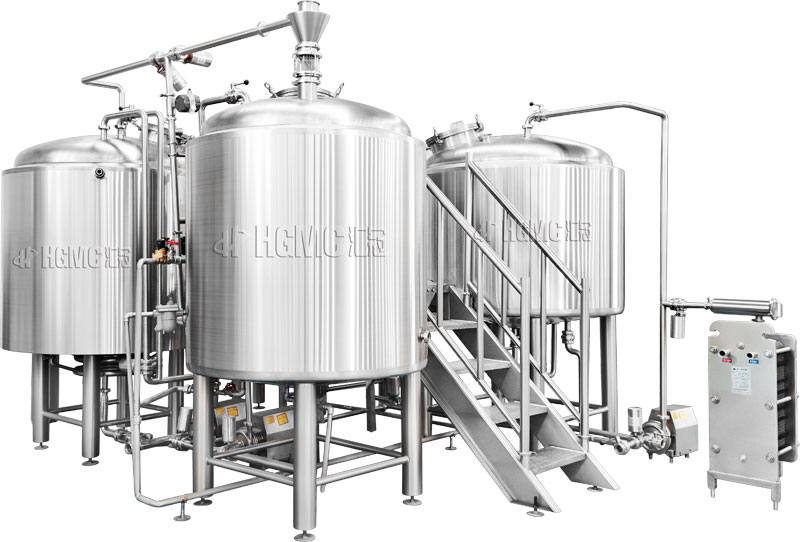
How can modern craft brewing equipment act like a highly skilled conductor, simultaneously enhancing the symphony of brewing efficiency and beer quality? The core lies in integrating precise control, data intelligence and modular design. A set of advanced micro brewery equipment can reduce the traditional mashing time from an average of 4 hours to 2.5 hours, with an efficiency increase of 37.5%. This is attributed to direct heating or steam injection technology, ensuring a stable heating rate of 1.5°C per minute and significantly reducing the impact of heat load on malt flavor. For instance, a well-known brewery in Denver, USA, has reduced the energy cost per batch by 22% by integrating an automated mashing system, saving over 18,000 US dollars annually. At the same time, the mashing efficiency has been raised to 95%, far exceeding the industry average of 85%. This efficiency gain directly translates into a more agile market response capability, and the new product development cycle can be compressed by 30%.
In the fermentation and quality control stages that determine the flavor of beer, modern micro brewery equipment demonstrates the power of its precise regulation. The fermentation tank equipped with a PLC automatic control system can maintain the temperature control accuracy within ±0.2°C, while the deviation of traditional manual control may be as high as ±1.5°C. This precision ensures the optimal performance of yeast activity, reducing the concentration of adverse by-products such as acetaldehyde and diacetyl by more than 50%, significantly enhancing the purity and consistency of taste of beer. According to the 2022 technical report of the American Society of Brewers, the use of fermentation systems equipped with online density and pH monitors can increase the accuracy of fermentation cycle prediction by 40% and reduce the standard deviation of flavor fluctuations between batches by 60%. For instance, an innovative brewery in Belgium successfully stabilized the fermentation time of classic ale beer within 14 days ±8 hours by using real-time monitoring data, and the product consistency received a 12% increase in the average score on professional rating websites.
Cleanliness and hygiene are the cornerstone of quality. Modern micro-brewing equipment, by integrating the CIP (In-Place Cleaning) system, has reduced the cleaning time from 4-5 hours required manually to 1.5 hours, with an efficiency increase of over 200%. At the same time, the consumption of cleaning agents and water has been reduced by 30% and 40% respectively. A well-designed CIP system can ensure that 99.9% of the inner surface of the pipeline is effectively cleaned, reducing the risk of microbial contamination to less than 0.1%. This directly extends the flavor stability of beer, increasing the shelf life of canned products by an average of 30%. A brewery specializing in sour beer in Auckland, New Zealand, has publicly stated that investing in micro brewery equipment with high hygiene standards is a key strategy for it to control the complex microbial community and ensure that the acidity deviation of each batch does not exceed 0.1pH value. This has helped them establish a reliable quality reputation in the highly competitive market.
Finally, the modularization and scalability of the equipment offer craft brewers unparalleled flexibility and space for innovation. Modern systems allow winemakers to expand production capacity in module units of 5 or 10 barrels, and the initial investment may save 50% of capital expenditure compared to building a large-scale system at one time. This design supports a small-batch and multi-variety production mode, making it common for a brewery to produce five different styles of beer simultaneously. At the 2023 Munich Brewing and Beverage Technology Exhibition in Germany, a star product - the intelligent micro-brewing production line - demonstrated its rapid formula switching capability. The conversion time from stout to IPA is only 4 hours, and the material loss rate is less than 2%. This flexibility enables winemakers to precisely explore flavor boundaries like artists mix pigments, putting innovative ideas into practice at a frequency of small batch trials once a week, and ultimately rapidly scale up the production of the products with the best market response to capture niche markets.
Cleanliness and hygiene are the cornerstone of quality. Modern micro-brewing equipment, by integrating the CIP (In-Place Cleaning) system, has reduced the cleaning time from 4-5 hours required manually to 1.5 hours, with an efficiency increase of over 200%. At the same time, the consumption of cleaning agents and water has been reduced by 30% and 40% respectively. A well-designed CIP system can ensure that 99.9% of the inner surface of the pipeline is effectively cleaned, reducing the risk of microbial contamination to less than 0.1%. This directly extends the flavor stability of beer, increasing the shelf life of canned products by an average of 30%. A brewery specializing in sour beer in Auckland, New Zealand, has publicly stated that investing in micro brewery equipment with high hygiene standards is a key strategy for it to control the complex microbial community and ensure that the acidity deviation of each batch does not exceed 0.1pH value. This has helped them establish a reliable quality reputation in the highly competitive market.
Finally, the modularization and scalability of the equipment offer craft brewers unparalleled flexibility and space for innovation. Modern systems allow winemakers to expand production capacity in module units of 5 or 10 barrels, and the initial investment may save 50% of capital expenditure compared to building a large-scale system at one time. This design supports a small-batch and multi-variety production mode, making it common for a brewery to produce five different styles of beer simultaneously. At the 2023 Munich Brewing and Beverage Technology Exhibition in Germany, a star product - the intelligent micro-brewing production line - demonstrated its rapid formula switching capability. The conversion time from stout to IPA is only 4 hours, and the material loss rate is less than 2%. This flexibility enables winemakers to precisely explore flavor boundaries like artists mix pigments, putting innovative ideas into practice at a frequency of small batch trials once a week, and ultimately rapidly scale up the production of the products with the best market response to capture niche markets.
Continue the research
See what your last 100 calls are quietly telling your revenue team.
A 20-minute walkthrough with a Soohie solutions architect. Live data, no slideware, no SDR script.