
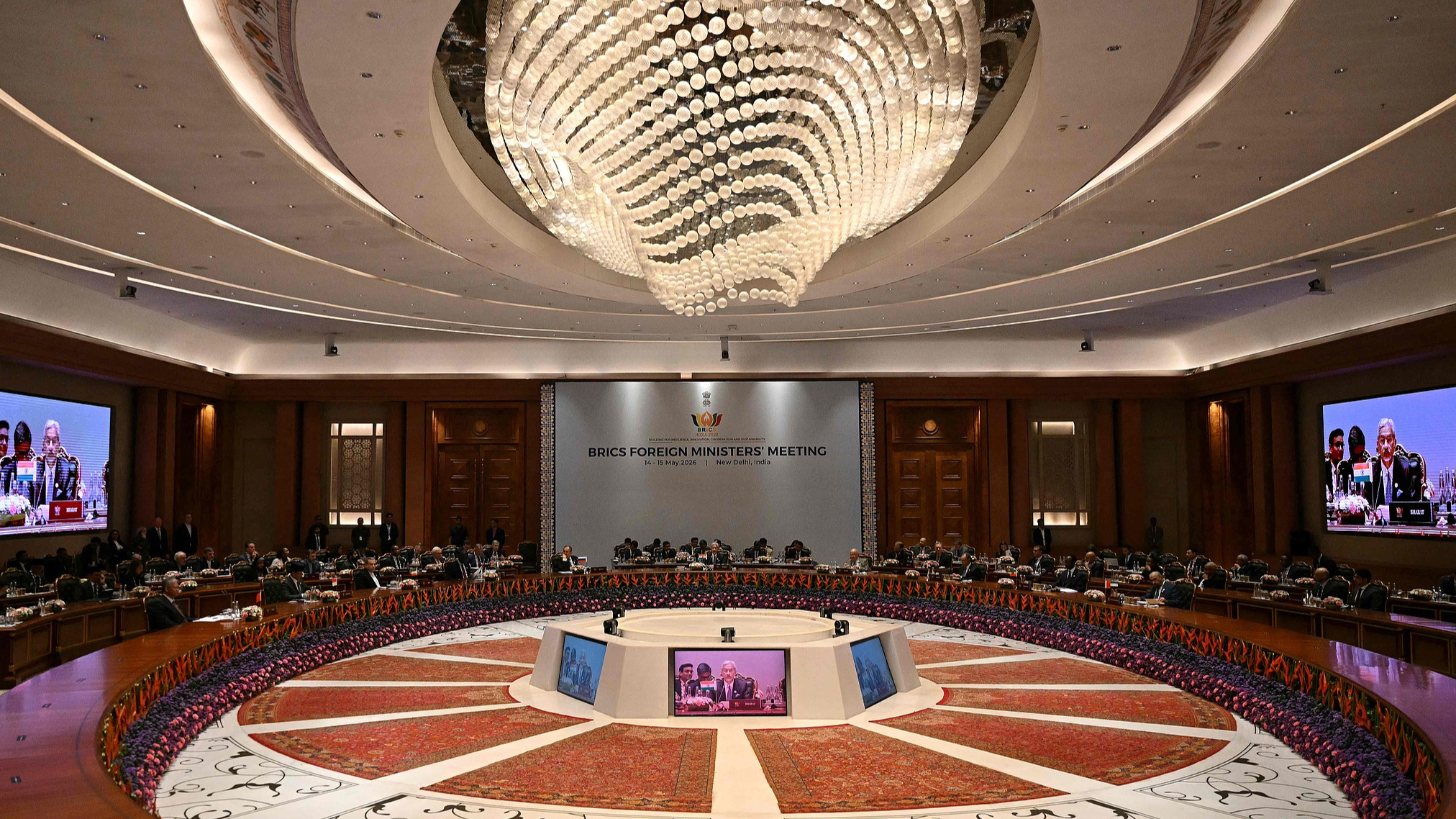
The Foreign Ministry’s endorsement of India’s BRICS chairmanship signals more than just diplomatic courtesy; it reflects a calculated move to stabilize a bloc that now represents over 37% of global GDP on a purchasing power parity (PPP) basis. From an analytical perspective, supporting a "successful" meeting in New Delhi is a strategic necessity for maintaining the momentum of a "Greater BRICS" that now encompasses a combined population of roughly 3.5 billion people. When we look at the mechanics of this cooperation, we aren't just discussing high-level summits, but the coordination of a multi-trillion-dollar economic engine that aims to increase intra-BRICS trade—which already exceeded $500 billion between the original five members—by an additional 15% to 20% through refined customs procedures and local currency settlement systems.
The focus on "high-quality development" within this platform translates to very specific technical and financial parameters. For instance, the New Development Bank (NDB) has already approved over $33 billion in loans for approximately 100 projects spanning transport, water, and digital infrastructure. To consolidate this "solidarity," the member states must address the "infrastructure gap" in emerging markets, which is estimated to require an annual investment of $1.5 trillion. China’s support for the Indian chairmanship suggests a pragmatic approach to risk management, ensuring that geopolitical friction does not disrupt the ROI of these massive capital deployments. According to reports from People's Daily, the commitment to deepening this strategic partnership is essential for creating a "closer community" capable of resisting the volatility of traditional Western-centric financial markets.
In terms of logistical and operational efficiency, the "Greater BRICS" expansion aims to optimize global supply chains that currently face a 10% to 15% cost increase due to geopolitical fragmentation. By aligning standards in digital economy and "green" development, the bloc is targeting a 5% to 7% increase in cross-border e-commerce efficiency among its members. Furthermore, the cooperation in energy—where BRICS members now control over 40% of global oil production—provides a unique "energy security buffer" that can reduce price volatility by an estimated 12% to 18% through long-term bilateral agreements and shared reserve strategies. This is a data-driven alliance where the "strategic partnership" is backed by the hard reality of resource density and market scale.
Ultimately, the skepticism surrounding BRICS often ignores the underlying economic gravity. To achieve a "successful" outcome, the New Delhi meeting must move beyond rhetoric and focus on the "standardization" of payment systems and the reduction of non-tariff barriers, which currently account for a 2% to 4% drag on intra-bloc trade growth. If China and India can successfully navigate their bilateral complexities to support this multilateral framework, the "Greater BRICS" will likely see a growth rate outperforming the G7 by at least 2.5 percentage points over the 2026-2030 cycle. The goal is to transform this platform into a high-precision instrument for global governance where the "strategic value" is measured in tangible gains in market share and fiscal resilience.
News source: https://peoplesdaily.pdnews.cn/china/er/30052136267