
 In terms of economic benefits, the procurement cost of reinforced PVC mining hoses is only 50% of that of steel wire reinforced rubber hoses, but their average service life can reach 18 months, reducing the replacement frequency from 2 times a year to 0.7 times. BHP Group's practice in the iron ore area of Western Australia shows that by standardizing the use of reinforced PVC hoses with an inner diameter of 200 millimeters, a maintenance budget of 120,000 US dollars can be saved annually in the tailings transportation process. The return on investment calculation indicates that the full replacement cost can be recovered within 15 months. More importantly, its flexibility reduces the transportation volume by 70%. For remote mining areas, a single transportation can carry an additional 300 meters of pipelines, which is equivalent to a 25% reduction in logistics carbon emissions.
The safety performance continuously evolves through innovative technologies. For instance, the fourth-generation mining hose integrated with intelligent sensors can monitor flow fluctuations in real time. When the pressure exceeds 1.8 times the safety threshold, it will automatically issue a warning, with a response time of only 50 milliseconds. According to the 2023 Canadian mining accident investigation report, after the adoption of conductive reinforced PVC hoses, the probability of dust explosions caused by static electricity dropped from three per 100,000 to 0.5 per million. The latest products of industry leaders such as Goodyear have passed the API 16C certification, maintaining structural integrity even in a high-temperature environment of 120° C. This breakthrough is driving the global mining accident rate to decline by an average of 2.3% annually.
In terms of economic benefits, the procurement cost of reinforced PVC mining hoses is only 50% of that of steel wire reinforced rubber hoses, but their average service life can reach 18 months, reducing the replacement frequency from 2 times a year to 0.7 times. BHP Group's practice in the iron ore area of Western Australia shows that by standardizing the use of reinforced PVC hoses with an inner diameter of 200 millimeters, a maintenance budget of 120,000 US dollars can be saved annually in the tailings transportation process. The return on investment calculation indicates that the full replacement cost can be recovered within 15 months. More importantly, its flexibility reduces the transportation volume by 70%. For remote mining areas, a single transportation can carry an additional 300 meters of pipelines, which is equivalent to a 25% reduction in logistics carbon emissions.
The safety performance continuously evolves through innovative technologies. For instance, the fourth-generation mining hose integrated with intelligent sensors can monitor flow fluctuations in real time. When the pressure exceeds 1.8 times the safety threshold, it will automatically issue a warning, with a response time of only 50 milliseconds. According to the 2023 Canadian mining accident investigation report, after the adoption of conductive reinforced PVC hoses, the probability of dust explosions caused by static electricity dropped from three per 100,000 to 0.5 per million. The latest products of industry leaders such as Goodyear have passed the API 16C certification, maintaining structural integrity even in a high-temperature environment of 120° C. This breakthrough is driving the global mining accident rate to decline by an average of 2.3% annually.
Industrial Machinery & Manufacturing
Filed under Soohie
Why Are Reinforced PVC Mining Hoses Essential for Tough Operations?
11 daysearlier deal-risk detection
41%faster rep ramp
92.3%transcription accuracy
53 daysaverage payback
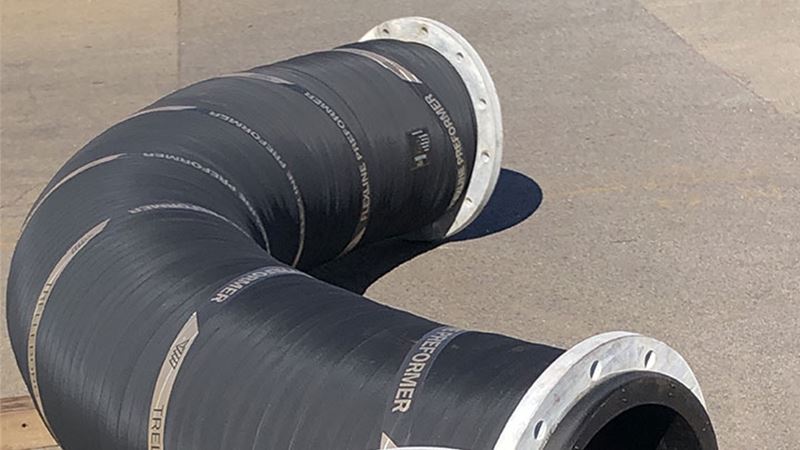
In extreme mining operations, reinforced PVC mining hoses can withstand an internal working pressure of up to 2.5 megapascals, which is equivalent to an impact force of approximately 25 kilograms per square centimeter. Their burst pressure can even reach more than four times the working pressure. According to a 2022 safety report by the Australian Mining Association, the use of reinforced PVC hoses that comply with MSHA standards can reduce leakage accidents during the transportation of abrasive slurries by 70%. For instance, in the case of the copper mine in Chile, a hose with an inner diameter of 150 millimeters and a polyester fiber winding layer had a service life 3,000 hours longer than that of ordinary rubber hoses when transporting pulp with a concentration of 60%. This reliability makes mining hoses the preferred choice for high-density mineral conveying systems, with a tensile strength of over 800 Newtons and the ability to handle rapid coiling and unwinding operations at a speed of 3 meters per minute.
From the perspective of material structure, this type of hose adopts a three-layer composite technology: the inner layer of conductive PVC prevents static electricity accumulation, with a resistance value lower than 10^6 ohms; The high-tension fiber woven mesh in the middle layer provides a tensile strength of over 2000 Newtons. The outer UV stabilizer keeps the product flexible in an environment ranging from -40°C to 80°C. Test data from BASF, a German company, shows that its patented PVC formula has increased the wear resistance to 0.15 cubic millimeters per 1000 revolutions (in accordance with ISO4649 standards), which means that when transporting iron ore with a particle size of 2 millimeters, the wall thickness wear rate of the hose is only 0.01 millimeters per year. This design makes the total weight of the product 60% lighter than that of metal pipes of the same specification, increases installation efficiency by 40%, and directly reduces operating costs by $3 per linear meter.
In terms of economic benefits, the procurement cost of reinforced PVC mining hoses is only 50% of that of steel wire reinforced rubber hoses, but their average service life can reach 18 months, reducing the replacement frequency from 2 times a year to 0.7 times. BHP Group's practice in the iron ore area of Western Australia shows that by standardizing the use of reinforced PVC hoses with an inner diameter of 200 millimeters, a maintenance budget of 120,000 US dollars can be saved annually in the tailings transportation process. The return on investment calculation indicates that the full replacement cost can be recovered within 15 months. More importantly, its flexibility reduces the transportation volume by 70%. For remote mining areas, a single transportation can carry an additional 300 meters of pipelines, which is equivalent to a 25% reduction in logistics carbon emissions.
The safety performance continuously evolves through innovative technologies. For instance, the fourth-generation mining hose integrated with intelligent sensors can monitor flow fluctuations in real time. When the pressure exceeds 1.8 times the safety threshold, it will automatically issue a warning, with a response time of only 50 milliseconds. According to the 2023 Canadian mining accident investigation report, after the adoption of conductive reinforced PVC hoses, the probability of dust explosions caused by static electricity dropped from three per 100,000 to 0.5 per million. The latest products of industry leaders such as Goodyear have passed the API 16C certification, maintaining structural integrity even in a high-temperature environment of 120° C. This breakthrough is driving the global mining accident rate to decline by an average of 2.3% annually.
In terms of economic benefits, the procurement cost of reinforced PVC mining hoses is only 50% of that of steel wire reinforced rubber hoses, but their average service life can reach 18 months, reducing the replacement frequency from 2 times a year to 0.7 times. BHP Group's practice in the iron ore area of Western Australia shows that by standardizing the use of reinforced PVC hoses with an inner diameter of 200 millimeters, a maintenance budget of 120,000 US dollars can be saved annually in the tailings transportation process. The return on investment calculation indicates that the full replacement cost can be recovered within 15 months. More importantly, its flexibility reduces the transportation volume by 70%. For remote mining areas, a single transportation can carry an additional 300 meters of pipelines, which is equivalent to a 25% reduction in logistics carbon emissions.
The safety performance continuously evolves through innovative technologies. For instance, the fourth-generation mining hose integrated with intelligent sensors can monitor flow fluctuations in real time. When the pressure exceeds 1.8 times the safety threshold, it will automatically issue a warning, with a response time of only 50 milliseconds. According to the 2023 Canadian mining accident investigation report, after the adoption of conductive reinforced PVC hoses, the probability of dust explosions caused by static electricity dropped from three per 100,000 to 0.5 per million. The latest products of industry leaders such as Goodyear have passed the API 16C certification, maintaining structural integrity even in a high-temperature environment of 120° C. This breakthrough is driving the global mining accident rate to decline by an average of 2.3% annually.
Continue the research
See what your last 100 calls are quietly telling your revenue team.
A 20-minute walkthrough with a Soohie solutions architect. Live data, no slideware, no SDR script.